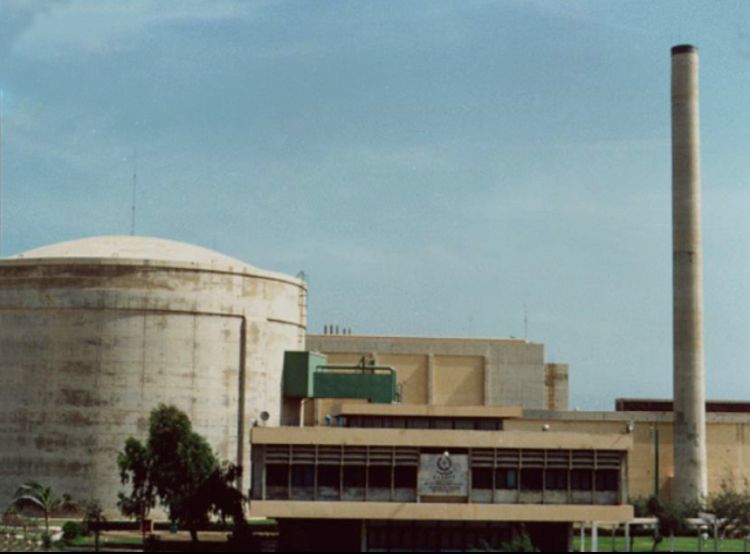
The Karachi Nuclear Power Plant (KANUPP), commonly referred to as K-1 or KANUPP-1, was Pakistan’s first commercial nuclear power plant. It is a CANDU-type pressurized heavy-water reactor (PHWR) with a gross electrical capacity of 137 MW (net approximately 125 MW), using natural uranium fuel and heavy water as both moderator and coolant. Located at Paradise Point on the Arabian Sea coast, about 15–18 km west of Karachi in Sindh, Pakistan, it was owned and operated by the Pakistan Atomic Energy Commission (PAEC).
The project was approved by the Pakistani government in January 1964. On 24 May 1965, the PAEC signed a turnkey contract with Canadian General Electric (CGE) for the design, supply, construction, and commissioning of the reactor. Construction began in 1967, and the reactor achieved criticality on 1 August 1971. It was connected to the grid on 18 October 1971 (or in some records, full commercial operation followed in November 1972 after final commissioning). The plant was officially inaugurated on 28 November 1972 by Prime Minister Zulfikar Ali Bhutto.
K-1 represented a milestone as the first nuclear power plant in the Muslim world and played a key role in Pakistan’s early energy diversification and nuclear technology development. It operated for nearly 50 years—well beyond its original 30-year design life—through indigenous efforts after Canada imposed restrictions on technical support, fuel, and spare parts following India’s 1974 nuclear test. PAEC teams developed local capabilities, including fuel fabrication starting in the late 1970s/early 1980s, enabling continued operation until its permanent shutdown on 1 August 2021.
Key figures and personnel
The establishment, design oversight, commissioning, and long-term operation of K-1 involved leadership from the PAEC and contributions from Pakistani scientists, engineers, and international partners (primarily Canadian under the turnkey contract).
• Ishrat Hussain Usmani — As Chairman of the PAEC (from around 1960 to 1972), Usmani was instrumental in initiating and advancing Pakistan’s nuclear power program. He oversaw negotiations with Canada and the IAEA for safeguards and support, laid the groundwork for KANUPP’s construction, and focused on training Pakistani scientists and engineers abroad to build national expertise. Usmani emphasized peaceful applications and was key in the project’s early phases, including site selection and international agreements.
• Munir Ahmad Khan — A reactor physicist and former director at the IAEA’s reactor division, Khan succeeded Usmani as PAEC Chairman in January/March 1972 (shortly before or around the plant’s inauguration). He accompanied Bhutto at the 1972 inauguration ceremony and led PAEC during K-1’s early commercial operations. Under his leadership (1972–1991), PAEC achieved self-reliance in fuel production and maintenance after the Canadian embargo, ensuring the plant’s continued safe operation without vendor support.